


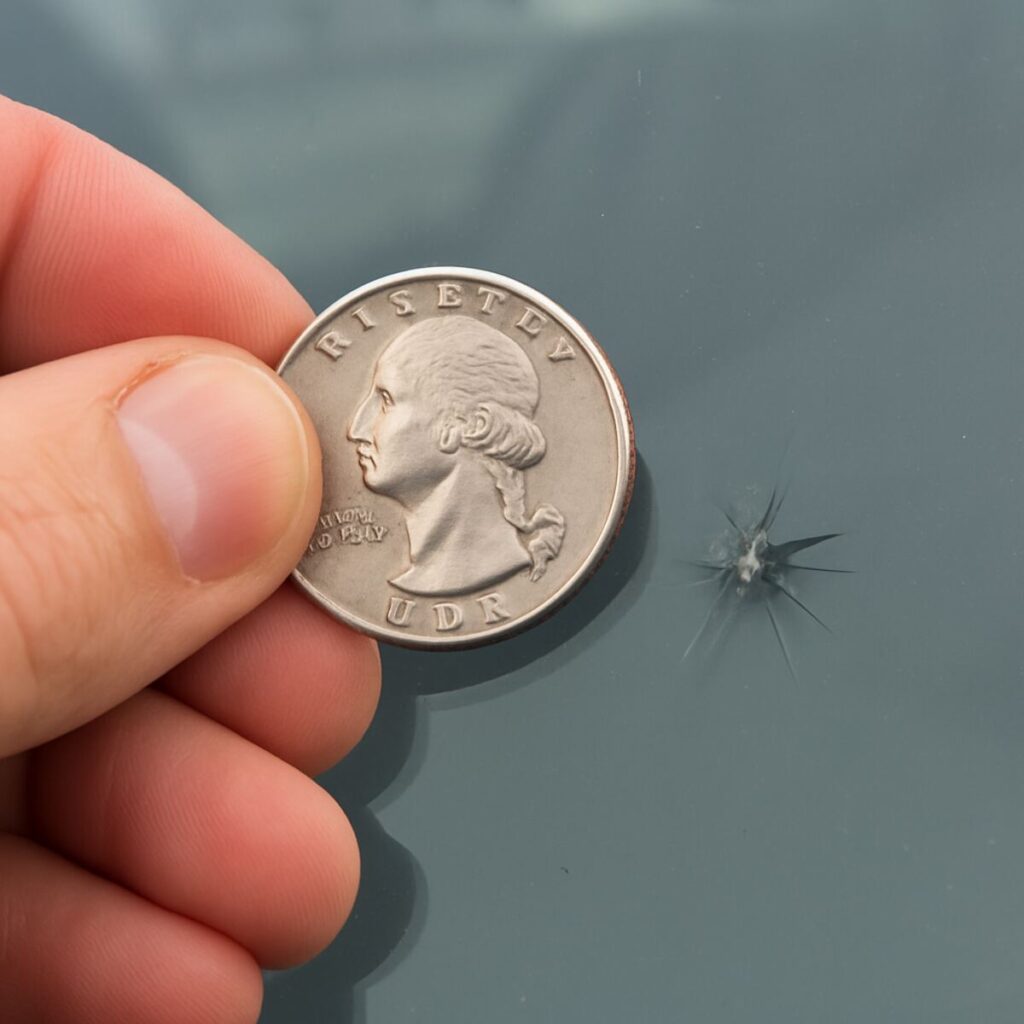
It happens in a split second on the 101: a tiny “clink” from a stray piece of gravel, and suddenly there is a distracting starburst right in your line of sight. Your stomach instantly drops as two urgent questions pop into your head: is my car safe to drive, and how much is this going to cost? Automotive safety data reveals that ignoring this small blemish can quickly turn a minor inconvenience into a major hazard. Select the best san mateo auto glass repair.
Your vehicle’s glass does much more than block the wind and rain. According to federal crash safety standards, the windshield provides up to 45% of the cabin’s structural integrity in a front-end collision and prevents the roof from caving in during a rollover. This strength comes from how the glass is made. Windshields use laminated glass—two sheets of glass bonded around a tough plastic core to keep it from shattering inward—while your side windows rely on tempered glass designed to break into dull, safe cubes. Because of this vital structural role, any weakness in that front laminated layer compromises your vehicle’s entire safety net.
Local weather actually acts as an invisible enemy to these minor impacts. San Mateo’s unique climate, with its signature cool, foggy mornings followed by warm, sunny afternoons, creates constant thermal expansion and contraction against your car’s frame. Automotive glass engineers note that these sudden temperature shifts cause microscopic stress fractures around the impact point to expand. What starts as a harmless surface pit on Tuesday can easily split into an unrepairable structural crack by Friday.
Fortunately, you do not need to be a mechanic to figure out if you need a quick fix or a full windshield replacement. Grab a coin from your center console and use these three visual checks to assess the damage right now:
- The Quarter Rule: If the entire chip or crack can hide completely beneath a standard quarter, a simple auto glass repair is highly likely.
- Location Check: Damage sitting directly in your steering wheel line of sight or touching the outer black edge of the windshield usually requires a new piece of glass.
- Depth Test: Run a fingernail gently over the spot; if it catches deeply, it is a structural crack rather than a simple surface pit.
Finding a reliable San Mateo auto glass repair service requires knowing what happens after that initial assessment. The right local shop will not just fill a hole; they will explain exactly how your California insurance covers the bill and why recalibrating your car’s safety sensors (ADAS) is as crucial as the glass itself. Knowing what to look for guarantees your family gets back on the road safely.
Why That Tiny Chip on the 101 Is a Ticking Time Bomb for Your Safety
While it seems like a minor annoyance, leaving a fresh rock chip exposed to our San Mateo fog creates a hidden physics problem. Every morning, coastal moisture seeps directly into the micro-cracks of that impact zone.
Once trapped inside, this water acts like a wedge through a process called hydrostatic pressure. As your car heats up in the afternoon sun, the trapped liquid expands, pushing outward against the fragile glass. This daily cycle of swelling and shrinking is exactly what causes tiny blemishes to suddenly tear across your entire windshield.
Beyond blocking your view, compromised glass loses its ability to protect your family during a collision. Your windshield acts as the essential backboard for the passenger airbag. If the glass is weakened by a crack, a deploying airbag can blow the windshield completely out of the frame, leaving it unable to properly cushion the passenger.
Taking action early is the secret to keeping your vehicle safe while saving up to 70% in replacement costs. By fixing rock chips before they spread, you also streamline most Peninsula auto glass insurance claims, which often cover these minor repairs completely. But how do you know if your current damage has already gone too far?
Repair vs. Replace: The 25-Cent Rule for Evaluating Glass Damage
Applying the aforementioned Quarter Rule in your driveway determines immediate next steps. If the impact is smaller than this coin, a quick fix is likely, stopping the damage before it “spiders” outward. Windshields are essentially glass sandwiches held together by a tough plastic center called the Polyvinyl Butyral (PVB) layer. When a deep chip pierces this PVB core, dirt permanently contaminates it, forcing a replacement. Conversely, tempered door glass usually shatters entirely upon impact, making the cost of side window glass repair a completely separate replacement expense.
Location also dictates your options, regardless of how small the blemish might be. The space directly above your steering wheel is known as the Critical Viewing Area (CVA). Because injected repair resin slightly distorts light, safety standards prohibit patching the CVA so your vision stays absolutely perfect during foggy Peninsula commutes.
Certain damage automatically disqualifies your car from a simple patch job to protect your vehicle’s structural integrity. A full replacement is mandatory when:
- A crack stretches longer than a standard credit card.
- The fracture reaches the outer edge of the windshield frame.
- The impact sits anywhere inside the driver’s CVA.
- Blemishes block the safety sensors behind your rearview mirror.
Once new glass is installed, modern vehicles require a crucial technological reset before hitting the highway again.
Why Your Car Needs ‘Glasses’: Demystifying ADAS Camera Calibration After Replacement
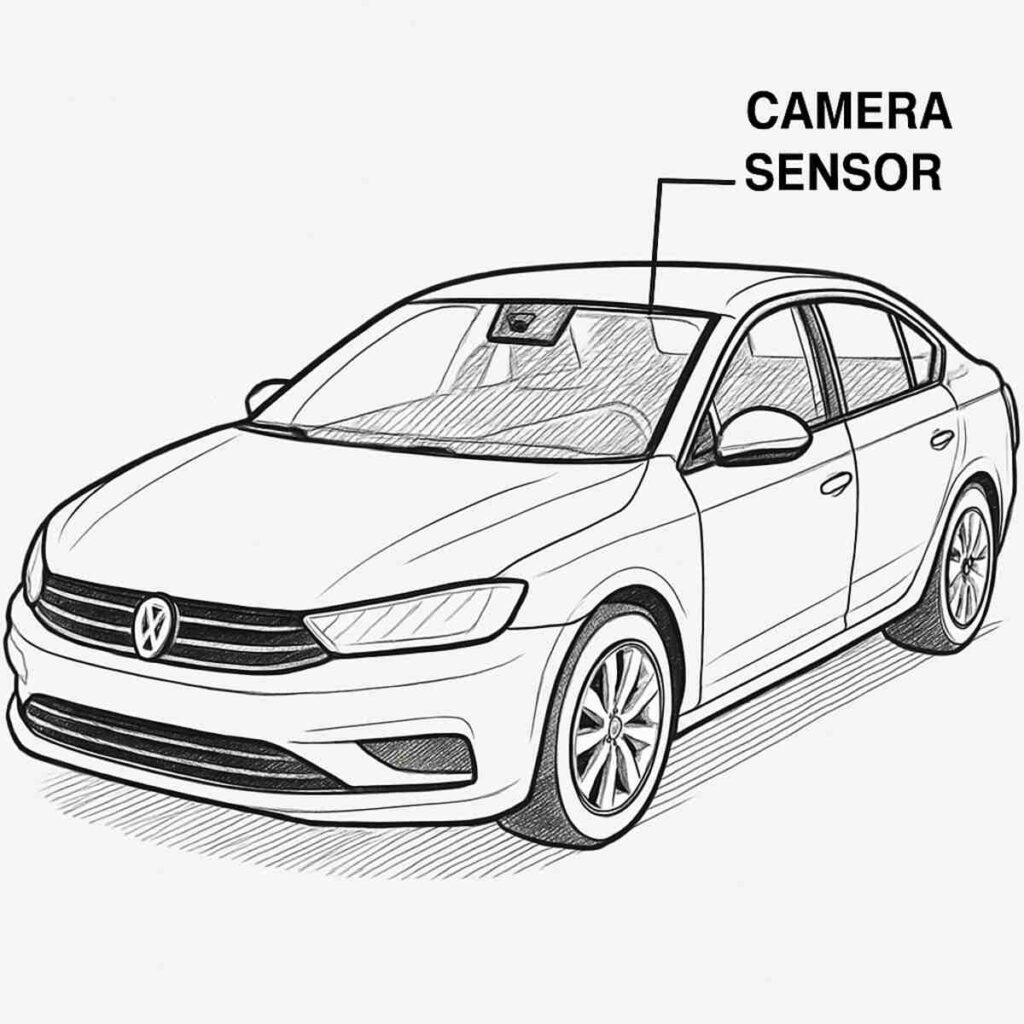
Modern windshields act as the primary lens for your vehicle’s safety features. Tucked right behind your rearview mirror is a small, forward-facing camera that manages everyday conveniences like Lane Keep Assist and Adaptive Cruise Control. Because this camera looks directly through the glass, its Sensor Field of View—the exact angle and physical area it monitors on the road—must remain absolutely perfect. If the camera shifts even a fraction of an inch, your car might falsely calculate that a lane line is two feet further to the right than it actually is.
Getting an auto glass repair often means removing the old windshield entirely, which temporarily unplugs and shifts this critical camera. When we install a fresh pane, we are essentially giving your vehicle a brand-new optical prescription, requiring us to mechanically realign its Advanced Driver Assistance Systems (ADAS). Without proper ADAS camera calibration services, your automatic braking might engage too late to prevent a parking lot fender-bender. The system simply has to relearn how to see through the slightly different curvature of the new glass.
Fixing this vision relies on two specific realignment methods, starting with what technicians call Static Calibration. This highly precise process happens indoors under controlled lighting, where experts place specialized geometric targets at an exact, manufacturer-specified distance away from your bumper. Using lasers and diagnostic tablets, the technician forces your vehicle’s computer to lock onto these visual targets, physically verifying the camera is perfectly centered before hitting the streets.
Certain vehicles also require a real-world test called Dynamic Calibration to finish the job. During this phase, a technician drives your car at set speeds along well-marked local roads—like a clear, dry stretch of Highway 92—while the onboard computer actively learns to recognize lane markers and speed signs. Once your safety systems are seeing clearly again, the next major question is what kind of “lens” they are looking through, making the choice of replacement glass brand an important factor for safety system accuracy.
OEM vs. Aftermarket Glass: Deciding if the Brand Name Is Worth the Extra Cost
Choosing the right “lens” for those safety cameras often comes down to the debate of OEM vs aftermarket auto glass. Original Equipment Manufacturer (OEM) glass is identical to the factory original, guaranteeing a flawless fit for sensitive ADAS sensors. Conversely, aftermarket options—sometimes called Original Equipment Equivalent (OEE)—are crafted by third parties without the brand stamp. While OEE glass is structurally safe, minor variations in curvature can sometimes complicate camera recalibration.
Beyond safety, your glass choice heavily impacts your daily commute. High-quality factory glass typically features an acoustic interlayer, a specialized sound-dampening vinyl sheet sandwiched directly inside the glass. Cheaper aftermarket alternatives often skip this soundproofing to lower the price tag. Without it, you might suddenly notice a frustrating increase in highway wind noise whistling through your cabin while cruising up the 101.
Protecting your vehicle also means reviewing the guarantees attached to the replacement. Reputable shops offer a lifetime warranty on glass installation covering leaks or stress cracks, but the manufacturer’s warranty on an aftermarket pane is often shorter than an OEM part. With the right glass selected, verifying whether a technician can safely perform this delicate swap in your driveway ensures a secure installation.
Is Mobile Auto Glass Repair Safe? Evaluating Convenience vs. Quality for On-Site Fixes
Having a technician fix your car at home is incredibly convenient, but many drivers wonder, is mobile auto glass repair safe? Yes, provided the environment is right. Technicians use a heavy-duty glue called urethane adhesive to bond the new glass to your car. However, this adhesive needs specific conditions to “cure” or harden. San Mateo’s famous morning fog can interfere with this bonding process if the seal gets too wet before setting.
To ensure a leak-proof seal during a mobile windshield replacement San Mateo drivers must provide a suitable workspace. Before booking mobile on-site glass repair, verify your location meets three requirements:
- Flat ground: The car must sit level so the heavy glass doesn’t shift.
- Dry shelter: A carport protects the fresh seal from heavy moisture.
- Consistent shade: Direct sun bakes the adhesive too quickly.
After the installation, you cannot simply hop in and drive. Your technician will provide a “Safe Drive Away Time” (SDAT)—the exact hours you must wait before the car is structurally safe to handle road vibrations. Respecting this clock guarantees the windshield properly supports your roof in an accident. Once you have these logistics sorted, the final step is figuring out how to fund the fix using your insurance coverage.
The $0 Windshield Hack: Leveraging Comprehensive Coverage in California
Covering the cost of side window glass repair or a windshield replacement isn’t always necessary out of pocket if you carry comprehensive car insurance. Many drivers miss a detail called the “Glass Deductible Waiver” on their policy. This add-on means your insurer pays the entire glass repair bill, completely bypassing your standard deductible. Instead of spending hundreds of dollars, your cost drops to zero.
Beware of a tactic known as “insurance steering” when you decide to use this coverage. If you call your insurer first, representatives often push you toward their preferred corporate chains. However, California law guarantees your right to choose any local shop to handle your Peninsula auto glass insurance claims. Reputable local shops will actually file the paperwork for you using insurance-approved billing rates, letting you skip the automated phone maze entirely.
Fear of rising premiums shouldn’t keep you from fixing compromised glass. In California, filing a comprehensive glass claim generally won’t increase your rates since highway rock chips are considered a “no-fault” incident. Beyond financial logistics, knowing the structural differences between laminated and tempered glass reveals which window actually protects you in a rollover.
Laminated vs. Tempered Glass: Knowing Which Window Protects You in a Rollover
When driving down the 101, your windshield acts as a critical structural pillar for your roof. This front window meets strict laminated safety glass standards using a clever “sandwich” design: two glass sheets glued to a tough plastic center. If gravel hits it, this plastic layer holds the broken pieces together, which is why a rock chip can often be filled instead of replacing the whole window.
Side windows play by completely different rules because they undergo a process called thermal strengthening. Manufacturers heat the glass and rapidly cool it, creating a tension-rich material. When comparing tempered glass vs laminated glass, the biggest difference is how they break. Instead of cracking into sharp, dangerous shards, a compromised side window instantly shatters into tiny, dull cubes. This intentional design prevents severe lacerations during a collision, keeping your family safe in the cabin.
Because this shattered glass completely disintegrates, repair simply isn’t an option. Damage to these side panels automatically requires an emergency car window replacement to secure your vehicle from San Mateo’s damp fog and potential theft. Vetting a local shop thoroughly ensures this crucial work is done correctly.
Choosing a Shop: The 3 Questions Every San Mateo Car Owner Should Ask
Trusting a mechanic with your family’s safety shouldn’t feel like a leap of faith. When vetting any facility for san mateo auto glass repair, first verify their AGSC (Auto Glass Safety Council) Certification. This credential acts like a strict health inspector’s grade, proving technicians follow critical national safety standards instead of just guessing.
Protect yourself financially by demanding the proper paperwork. If a shop avoids offering a lifetime warranty on glass installation, you might get stuck paying for future replacement labor. This protection is absolutely vital against stress cracks—spontaneous fractures that occur when improperly fitted glass suddenly expands during a foggy local morning.
Before leaving the shop, always check the craftsmanship to catch dangerous shortcuts. Perform this quick 5-step inspection list before driving away:
- Verify the black rubber molding sits flush with straight, even alignment.
- Look for messy, excess glue squeezing out near the dashboard.
- Ensure your windshield wipers rest perfectly in their original positions.
- Test your washer fluid jets to confirm they were properly reconnected.
- Listen carefully for whistling wind noise during a short test drive.
With a reliable shop selected, following a structured action plan minimizes stress during a glass emergency.
A 5-Step Action Plan for Your San Mateo Glass Emergency
A proactive response to road debris damage secures your vehicle’s structural integrity and maintains its resale value. Taking quick action prevents a tiny blemish from spreading in our cool, foggy mornings. Start with a simple visual check today to see immediate results and determine your next move. Follow this exact timeline of action to safely resolve the issue:
- Hear the ‘clink’: Safely pull over and measure the damage against a quarter or a credit card.
- Call your insurance: Check your glass coverage to see if the fix will be a no-cost win.
- Schedule mobile service: Book a local technician who understands our Bay Area climate.
- Verify calibration: Confirm your forward-facing safety cameras are perfectly realigned.
- Final inspection: Look through the glass to ensure a clear, distraction-free view before driving.
Most local mobile services can complete the physical installation in just about an hour, meaning you won’t have to sacrifice your entire weekend to get your car back on the road safely.
Once comfortable with the repair timeline, remember that a proper windshield replacement is much more than just swapping out a piece of glass. It ensures long-term safety through proper ADAS calibration. When those vital safety sensors are accurately reset, your car will ‘see’ the road, brake, and steer exactly as the manufacturer intended.
Each time you handle this kind of maintenance promptly, you build confidence as a vehicle owner. You no longer see your windshield as just a barrier against the wind, but as a critical safety shield protecting your family. Take that first step to address any existing damage today, and enjoy the pure peace of mind that comes with a crystal-clear commute.