



The landscape of modern business finance is evolving at a breakneck pace. For decades, companies followed a traditional, rigid path: you start a business, you hire a bookkeeper, eventually, you bring on a controller, and when revenues hit a massive threshold, you recruit a full-time Chief Financial Officer (CFO). However, the modern business ecosystem demands agility. Today’s fast-growing startups and mid-market enterprises need high-level financial strategy long before they have the budget or the need for a full-time executive sitting in a corner office. To learn more, check out https://usfractionalcfo.com/for-businesses/
Enter the fractional CFO—a strategic financial partner who brings decades of executive-level experience to your business on a part-time, contract, or as-needed basis.
Leveraging a fractional CFO can be the difference between a business that merely survives and one that scales sustainably. By tapping into elite financial leadership without the burden of a C-suite salary, you can optimize cash flow, prepare for capital raises, and navigate complex growth periods.
In this comprehensive guide, we will explore everything you need to know about this growing trend. We will dive deep into the ecosystem surrounding these professionals, such as the US Fractional CFO Alliance, explore exactly how they differ from your everyday accountant, and provide actionable frameworks for integrating one into your growing team.
Chapter 1: Decoding the Fractional CFO
Before you can leverage a fractional executive, you must understand exactly what they do and where they fit into your organizational chart. A fractional CFO is not just a glorified accountant or a temporary consultant. They are seasoned executives who embed themselves into your company’s leadership team, providing forward-looking financial strategy.
What is a Fractional CFO?
A fractional CFO is an experienced financial executive who offers their services to multiple companies simultaneously. They provide the exact same level of expertise, strategic foresight, and leadership as a traditional full-time CFO, but they do so for a “fraction” of the time and a “fraction” of the cost.
Whether you need someone for one day a week, a few days a month, or on a project-specific basis (such as preparing for an acquisition), these professionals tailor their involvement to fit your precise needs. This creates a system of scalable financial advisory for small businesses that allows you to dial their involvement up or down as your company evolves.
Outsourced Accounting vs Fractional CFO Services
One of the most common points of confusion for business owners is understanding the difference between outsourced accounting vs fractional CFO services. While both are critical components of business finance, their functions are fundamentally different.
- The Bookkeeper: Records daily transactions, manages accounts payable and receivable, and ensures the general ledger is accurate. Their focus is strictly on the present.
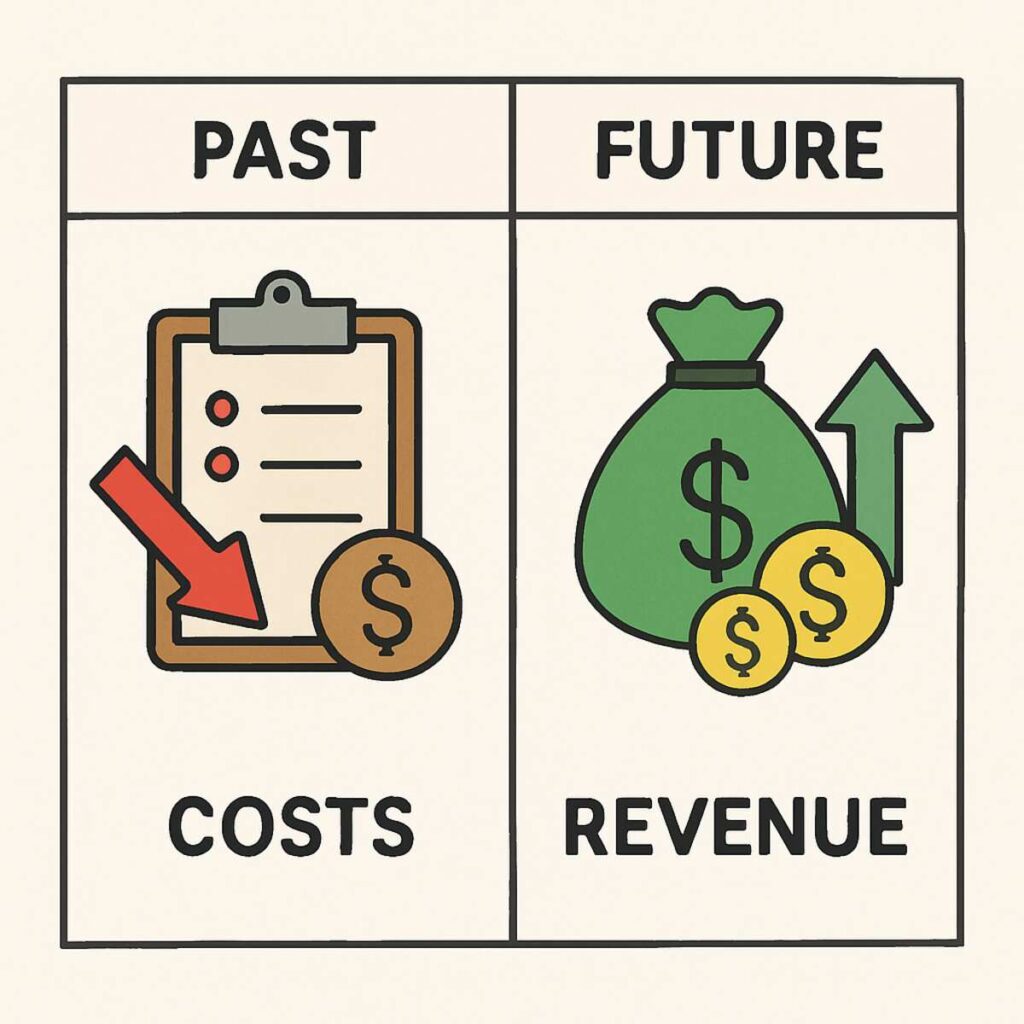
- The Accountant/Controller: Reconciles the books, ensures tax compliance, and generates historical financial statements (like the balance sheet and income statement). Their focus is primarily on the past.
- The Fractional CFO: Analyzes the data provided by the bookkeeper and controller to map out the future. They focus on strategic planning, cash flow forecasting, capital structuring, risk management, and profitability optimization.
If your financial team is only telling you what happened last month, you are driving your business by looking in the rearview mirror. A fractional CFO provides the headlights, allowing you to see what is coming and navigate accordingly.
Chapter 2: The Power of the US Fractional CFO Alliance
As the demand for part-time financial leadership has exploded, the market has become saturated with consultants of varying skill levels. This rapid growth created a critical need for standardization, community, and vetted excellence within the industry. This is where organizations like the US Fractional CFO Alliance come into play.
What is the US Fractional CFO Alliance?
The US Fractional CFO Alliance is a premier professional network designed specifically to support, educate, and connect fractional financial executives across the nation. For business owners, this organization serves as a hallmark of quality. When you are looking for someone to trust with the financial health of your company, knowing they are associated with a recognized, standard-setting body provides immense peace of mind.
Why This Alliance Matters to Business Owners
When a business seeks outsourced financial management services, the biggest hurdle is trust. How do you know the consultant you are hiring actually has the chops to steer your company through a crisis or a major growth phase?
The US Fractional CFO Alliance plays a vital role in finding vetted financial executives. Because the alliance holds its members to high standards of practice, business owners can feel confident that they are hiring professionals who are actively engaged in continuous education, industry best practices, and peer-to-peer knowledge sharing.
Why This Alliance Matters to the Executives
For the CFOs themselves, operating independently can sometimes be an isolating experience. The alliance acts as a robust professional network for financial consultants, allowing them to share insights, discuss complex regulatory changes, and collaborate on unique client challenges.
The financial executive membership benefits offered by such alliances usually include access to proprietary financial modeling tools, legal and regulatory updates, and exclusive training on emerging financial technologies (like AI in forecasting). Ultimately, when a CFO benefits from this high-level ecosystem, those benefits trickle directly down to you, the client, resulting in sharper strategies and better business outcomes.
Chapter 3: Identifying the Tipping Point: When to Hire a Part-Time CFO?
A frequent question that arises in the minds of founders and CEOs is: “When to hire a part-time CFO?”
Hire one too early, and you might be paying for strategic horsepower you don’t yet need. Hire one too late, and you might find yourself in a preventable cash flow crisis or missing out on lucrative growth opportunities.
While every business is unique, there are several universal trigger points that indicate it is time to bring a fractional CFO on board.
Trigger 1: Rapid, Unpredictable Growth
When your revenues suddenly spike, it can feel like a massive victory. However, rapid growth often masks underlying financial inefficiencies. Rapid scaling requires more capital, more staff, and more inventory. Without careful planning, a company can literally grow itself out of business by running out of cash. A fractional CFO will build dynamic financial models that project cash needs based on various growth scenarios, ensuring you have the runway to support your expansion.
Trigger 2: Severe Cash Flow Bottlenecks
Are you showing a profit on your income statement but constantly struggling to make payroll? This is a classic timing issue between Accounts Receivable (money coming in) and Accounts Payable (money going out). Solving cash flow issues with executive oversight is one of the most immediate and impactful ways a fractional CFO provides value. They will implement 13-week rolling cash flow forecasts, renegotiate vendor terms, and optimize your collection processes to free up trapped capital.
Trigger 3: Preparing for a Capital Raise or Exit
If you are planning to raise equity (Series A, B, etc.), take on significant debt, or position your company for a merger or acquisition (M&A), you cannot rely on basic bookkeeping. Investors and buyers will subject your business to rigorous financial due diligence. Providing strategic financial leadership for startups during a raise is a primary function of a fractional CFO. They will ensure your financial house is in perfect order, build investor-grade financial models, and help you articulate your financial narrative to stakeholders.
Trigger 4: Navigating Audits and Compliance
As your business grows, regulatory scrutiny increases. You may find yourself facing an audit from a government agency or an audit required by a new banking partner. Navigating complex financial audits with part-time help from a seasoned CFO can save your company from severe penalties, lost time, and immense stress. They know exactly what auditors are looking for and will act as the liaison between your company and the auditing firm.
Chapter 4: What Are the Qualifications of a Fractional CFO?
If you have decided that the time is right to bring on financial leadership, the next step is evaluating candidates. But what are the qualifications of a fractional CFO? Unlike the title of CPA (Certified Public Accountant), which is legally regulated, the title of “Fractional CFO” is not. Therefore, it is entirely on you to ensure the professional you hire has the requisite background.
When assessing a candidate (or relying on a network like the US Fractional CFO Alliance to help you find one), look for the following core qualifications:
1. Traditional Corporate Experience
The best fractional CFOs usually have a decade or more of experience working as full-time financial executives (Controllers, VPs of Finance, or CFOs) in established corporations. They have “been there, done that” and are bringing the lessons they learned in the corporate world to your smaller, growing business.
2. Industry-Specific Financial Expertise
Business finance is not one-size-fits-all. The financial mechanics of a SaaS (Software as a Service) startup are entirely different from those of a heavy manufacturing firm or a retail franchise. You must prioritize industry-specific financial expertise for growing firms. A CFO who understands your industry will already know your standard profit margins, industry KPIs (Key Performance Indicators), and specific regulatory hurdles.
3. Advanced Technological Proficiency
Modern finance is driven by technology. A qualified fractional CFO should be highly proficient in modern cloud-based accounting systems (like QuickBooks Online, NetSuite, or Xero), as well as advanced financial modeling software, BI (Business Intelligence) tools, and data visualization platforms like Tableau or PowerBI.
4. Strategic Communication Skills
A great CFO is a storyteller. They must be able to take complex, dense financial data and translate it into clear, actionable insights for the CEO, the board of directors, and non-financial department heads. If a CFO candidate speaks only in accounting jargon and cannot explain concepts simply, they will struggle to integrate into your leadership team.
Chapter 5: Unpacking the Financial Strategy
Once you have hired your fractional CFO, what exactly will they do? The scope of their work will depend on your specific needs, but their ultimate goal is always to maximize the enterprise value of your company. Here is a deep dive into the strategic initiatives they will likely undertake.
Improving EBITDA Through Strategic Planning
EBITDA (Earnings Before Interest, Taxes, Depreciation, and Amortization) is a critical metric used to measure a company’s overall financial performance and is heavily relied upon by investors to determine company valuation. Improving EBITDA through strategic planning is arguably the highest-ROI activity a fractional CFO will perform.
How do they do this?
- Pricing Strategy: They will analyze your current pricing models. Are you leaving money on the table? Are your margins being eroded by rising supply chain costs? A fractional CFO will help you implement dynamic pricing strategies, tiered pricing, or subscription models to increase top-line revenue without proportionally increasing costs.
- Cost Rationalization: They will perform a deep dive into your expenses, not just to blindly cut costs, but to cut inefficient costs. They will identify redundant software subscriptions, renegotiate bloated vendor contracts, and optimize your labor force expenses.
- Product/Service Profitability Analysis: Not all revenue is good revenue. A CFO will help you identify which of your products, services, or clients are actually driving your profit, and which are acting as a drain on your resources. You may be advised to drop a high-revenue but low-margin product line to instantly improve your overall EBITDA.
Building Robust Financial Models
A financial model is a mathematical representation of your company’s financial performance. A fractional CFO will build dynamic models that allow you to play out “What-If” scenarios.
- What if we hire 10 new sales reps next quarter?
- What if our primary supplier raises their prices by 15%?
- What if we open a new location in a different state?
These models allow you to see the financial impact of your decisions before you make them, drastically reducing business risk.
Optimizing the Capital Structure
Every business is funded by a mix of debt (loans, credit lines) and equity (investor capital, retained earnings). A fractional CFO will analyze your capital structure to ensure it is optimal. They can help you refinance high-interest debt, secure better lines of credit to smooth out cash flow, or determine the exact amount of equity you should give up during a funding round to prevent unnecessary dilution of your ownership.
Chapter 6: Full-Time vs Fractional CFO Cost Analysis
One of the most compelling reasons businesses turn to fractional services is the cost savings. Let us break down a comprehensive full-time vs fractional CFO cost analysis to illustrate the financial impact.
The True Cost of a Full-Time CFO
Hiring a highly qualified, full-time CFO is an expensive endeavor. According to various industry reports, the base salary for a full-time CFO in the United States typically ranges from $175,000 to over $300,000 per year, depending on the region and industry.
But the base salary is just the beginning. The true cost of a W-2 employee includes:
- Base Salary: $200,000 (Conservative average)
- Payroll Taxes: ~$15,000
- Health Benefits & Insurance: ~$20,000
- Bonuses / Profit Sharing: ~$30,000+
- Equity/Stock Options: (Hard to quantify, but very expensive in the long run)
- Overhead (Tech, Office Space, etc.): ~$10,000
- Total Annual Estimated Cost: $275,000+ (plus equity)
The Cost of a Fractional CFO
Fractional CFOs typically charge either an hourly rate, a daily rate, or a fixed monthly retainer based on the scope of work.
- Hourly Rates: Typically range from $200 to $400+ per hour.
- Monthly Retainers: Typically range from $3,000 to $10,000 per month, depending on how deeply they are embedded in your operations (e.g., one day a week vs. three days a week).
If you hire a fractional CFO on a monthly retainer of $5,000, your annual cost is exactly $60,000.
The ROI Perspective
By choosing the fractional route, you are saving upwards of $200,000 per year while still receiving top-tier financial leadership. Furthermore, you do not pay for their downtime, their vacations, or their benefits. You pay strictly for the high-value, strategic output they provide. For startups and mid-market companies, this cost efficiency is the ultimate game-changer, allowing you to reinvest that saved $200,000 directly into sales, marketing, or product development.
Chapter 7: Integrating a Fractional Leader into Your Team
Hiring a fractional CFO is a massive step forward, but the success of the engagement relies heavily on how well you onboard them. Integrating a fractional leader into your team requires deliberate effort, transparent communication, and clear expectations. Because they are not physically in your office 40 hours a week, you must establish systems to ensure they can operate efficiently.
Step 1: Provide Unrestricted Access to Data
A CFO is only as good as the data they can analyze. From day one, your fractional CFO needs unrestricted access to your accounting software, your bank accounts (view-only access is fine for security), your CRM (Customer Relationship Management) system, and your historical tax returns. Do not make them jump through administrative hoops to get the numbers they need.
Step 2: Define Clear, Measurable KPIs
Do not hire a fractional CFO with a vague mandate to “fix our finances.” Work with them in the first two weeks to establish specific Key Performance Indicators (KPIs) for their engagement. Examples might include:
- Reduce Days Sales Outstanding (DSO) from 60 days to 45 days within three months.
- Finalize a 24-month rolling forecast model by the end of month one.
- Identify and cut 10% of unnecessary operational expenditures by the end of Q2.
Step 3: Align Them With Your Internal Team
Your fractional CFO must have a strong working relationship with your existing financial staff (bookkeepers, controllers). Make sure your internal team understands that the fractional CFO is not there to replace them or micromanage them, but rather to lead them, elevate their work, and handle the high-level strategy that falls outside the internal team’s scope.
Step 4: Establish a Communication Cadence
Because they are part-time, communication must be highly intentional. Set up a recurring schedule. For example:
- Weekly: A 45-minute tactical meeting to review short-term cash flow and immediate hurdles.
- Monthly: A 2-hour strategic meeting to review the previous month’s financial statements, compare actuals to the budget, and adjust forecasts.
- Quarterly: A half-day deep-dive with the CEO and other executives to review overarching business goals, EBITDA progress, and long-term capital needs.
Chapter 8: Overcoming Common Roadblocks
While leveraging outsourced financial leadership offers incredible benefits, business owners should be aware of potential challenges and how to overcome them.
Roadblock 1: The Culture Clash
Sometimes, an outside executive may struggle to adapt to the unique culture of a fast-paced startup or a tight-knit family-owned business. To prevent this, involve key stakeholders in the interview process. Ensure the fractional CFO’s communication style and personality align with your core values. Remember, finding vetted financial executives through reputable networks often helps mitigate this, as these professionals are accustomed to adapting to diverse corporate cultures rapidly.
Roadblock 2: Scope Creep
Because a fractional CFO is so highly skilled, it is tempting for CEOs to start throwing non-financial tasks their way (e.g., HR management, IT decisions, or general operations). This is known as scope creep. If a fractional CFO is spending their limited, highly-paid hours dealing with an IT vendor dispute, they are not working on your financial strategy. Protect their time ruthlessly and keep them focused strictly on business finance.
Roadblock 3: Resistance to Change
A good CFO will inevitably shine a light on inefficiencies in your business. They may tell you that a pet project needs to be shut down, or that your pricing model is flawed. This can be difficult for passionate founders to hear. The key to success is keeping an open mind. You are hiring this professional for their objective, data-driven perspective. You must be willing to embrace the changes they recommend, even if it disrupts the status quo.
Chapter 9: The Future of Fractional Financial Leadership
The trend toward fractional executive leadership is not a temporary fad; it is a fundamental shift in how businesses structure their C-suites. As remote work technologies continue to improve and the gig economy extends to the executive level, the fractional model will become the standard rather than the exception for growing companies.
Organizations and communities will continue to evolve to support this ecosystem. The role of bodies like the US Fractional CFO Alliance will only become more critical as they continue to refine industry standards, offer professional development, and connect top-tier talent with the businesses that desperately need them.
For business owners, this democratization of executive talent levels the playing field. You no longer need to be a Fortune 500 company to have Fortune 500 financial leadership. You can access the brightest financial minds in the industry on your terms, at your budget, and tailored precisely to your growth trajectory.
Conclusion
Building a business is an incredibly demanding journey, and attempting to navigate the complexities of corporate finance alone is a risk no founder should take. Understanding when to pivot from basic accounting to strategic financial planning is often the catalyst that propels a company from stagnation to massive, profitable scale.
By leveraging a fractional CFO, you unlock scalable, high-level expertise that fits your current budget. Whether you need help solving immediate cash flow issues with executive oversight, preparing for a high-stakes capital raise, or simply improving EBITDA through strategic planning, these professionals provide the critical insights necessary for success.
Take the time to assess your current financial leadership. Are you looking strictly at the past, or do you have a clear, modeled vision of your financial future? Utilize reputable networks to find the right talent, ensure they have the proper industry-specific expertise, and integrate them thoughtfully into your operations. When executed correctly, a fractional CFO is not just an outsourced consultant—they become the strategic co-pilot your business needs to reach its ultimate destination.